
A visit to the SUEZ Waste Recycling Plant
“Plastics – if it’s bottle-shaped we’ll have it” says Richard, who manages this site at West Sleekburn. Other plastics can be recycled, but not by our local Suez plant. That’s worth remembering as yet again you try to decide what to put in your recycling bin. You should also leave the top screwed on as it can’t be sorted if binned separately. And don’t flatten your aluminium cans top down – once they just look like lids, the processing equipment doesn’t recognise them.
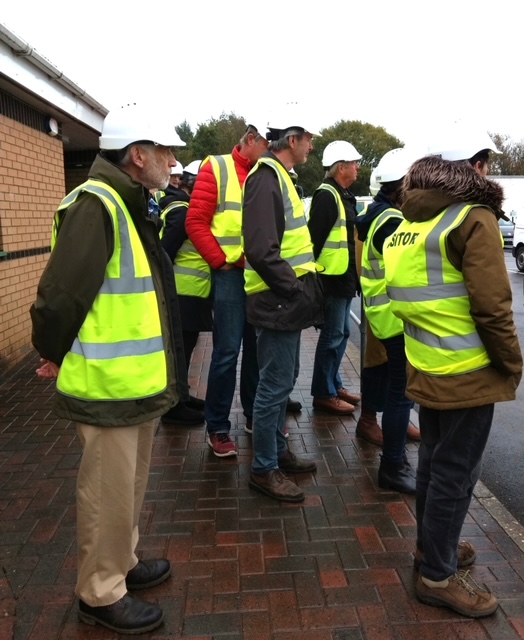
A dozen of us from SNAC took this tour. The site was opened in 2008 (after much local opposition) at a cost of £12m, in a 28-year PFI partnership with Northumberland County Council. The main objective was to divert 92% of residents’ waste away from landfill. On average, 75,000 tonnes of recyclable waste go to our local Waste Transfer Stations (such as Alnwick) and 50,000 tonnes directly to the Materials Recycling Facility. Our green bin waste which can’t be recycled goes to Teesside to be cleanly burnt as Energy from Waste (EfW).
Our home recycling bins should contain only Newspapers & Magazines, Mixed paper, rinsed Steel & Aluminium cans, Cardboard, and rinsed Plastic bottles. However, 25% of what arrives is not on the target list, and sadly there’s also a lot of contamination – from shredded paper which clogs machinery and is a fire risk, and dirty bottles and cans, to actual food waste (which can quickly spread through a lorry load), used nappies, and even occasional dead animals. Some of it arises from confusion about what goes where, but some of it is down to just not caring. Contaminated loads mean extra expense to transfer the waste to Teesside, plus lost revenue (£300k annually).
SUEZ is now looking at recycling other plastic containers, but they will need to reconfigure the plant and (said Wendy from NCC) renegotiate the contract, both of which are an expensive process. They are also aiming for home glass collection, but as central Government intends to roll out a scheme ‘in a few years’, NCC doesn’t want to spend Council Tax payers’ money on a scheme now.
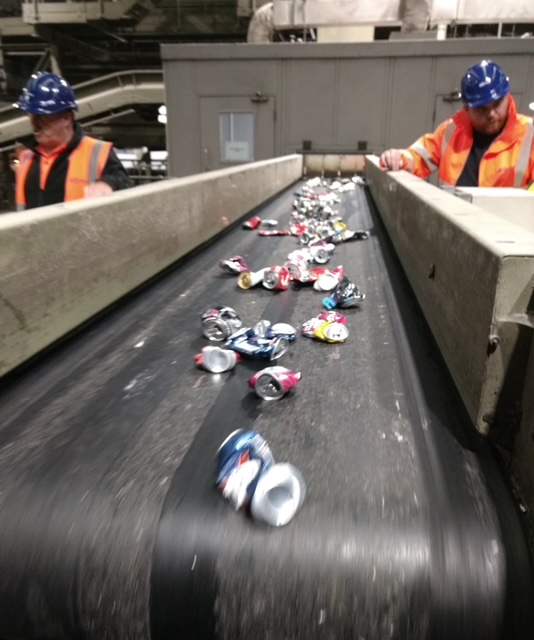
The process (which runs from 5.30am – 12.30am):
Waste is deposited from lorries and an initial sort takes out ‘large residue’ such as ironing boards (!), large toys and so on.
Fast-moving conveyor belts travelling at an extraordinary speed carry it through a trommel, a large rotating drum with 3 sizes of aperture through which waste is sorted by size, under air knives which sort by weight (paper and lightweight aluminium cans for example are separated out by air), and past magnets which remove ferrous metals. Rollers flatten plastic bottles.
Teams of people in picking cabins then do a final sort by hand, whisking inappropriate materials off the conveyor belt into labelled bins.
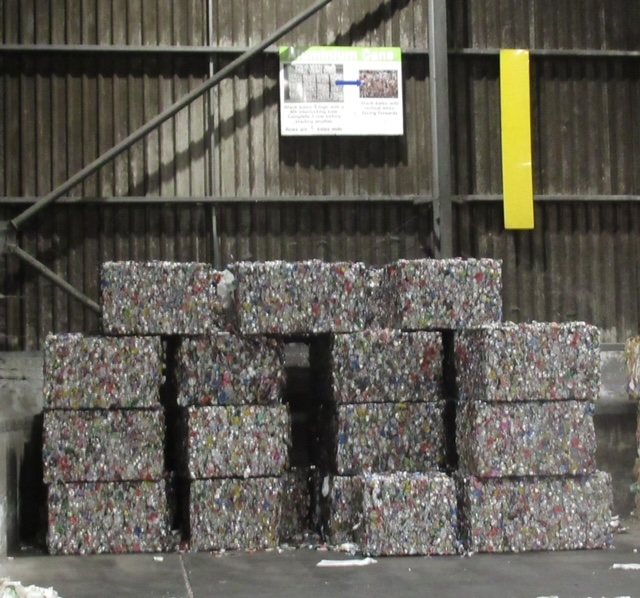
The sorted and separated categories (steel, aluminium, card, plastics) are then baled, (soft paper is sold loose) and transported by lorry to their buyers. Accuracy and cleanliness of each material is essential for acceptability and the best prices. Some of this recyclable material is sold abroad to be re-manufactured; we have neither the manufacturing capability in the UK (we only have one remaining paper mill for example) or the market for all the recyclable material we discard.
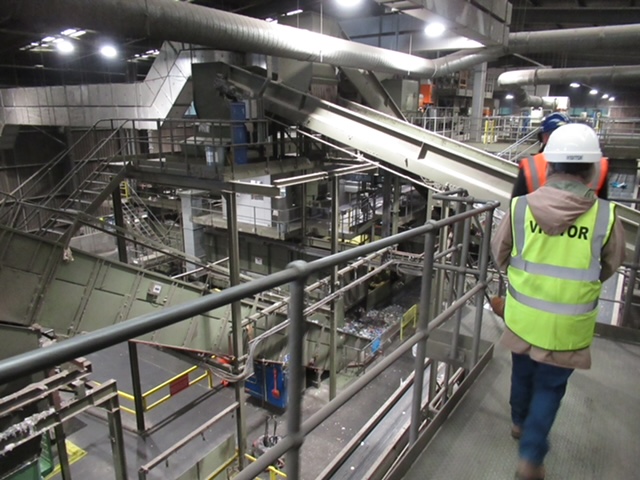
The plant is vast, airy, odourless, very noisy, and quite dusty – mainly from paper waste. We walked along aerial walkways, up steps, down steps, always accompanied by or looking down on hurtling belts bearing bouncing bottles, cans and paper, then visited the control room, where a computerised system displays a map of the entire sequence, and can instantly pin-point areas of failure and close down the entire system. We greatly admired the staff on the hand-picking belts, who have to be so totally focussed for the whole of their 2-hour shifts. Though there is still so much to be done about waste, not least reducing packaging, we can rest assured that plants such as this, and the EfW initiative, are working to capacity (“The flow never stops!” says Richard) to ensure the re-use of materials and reduce the pressure on landfill.
 snac.online